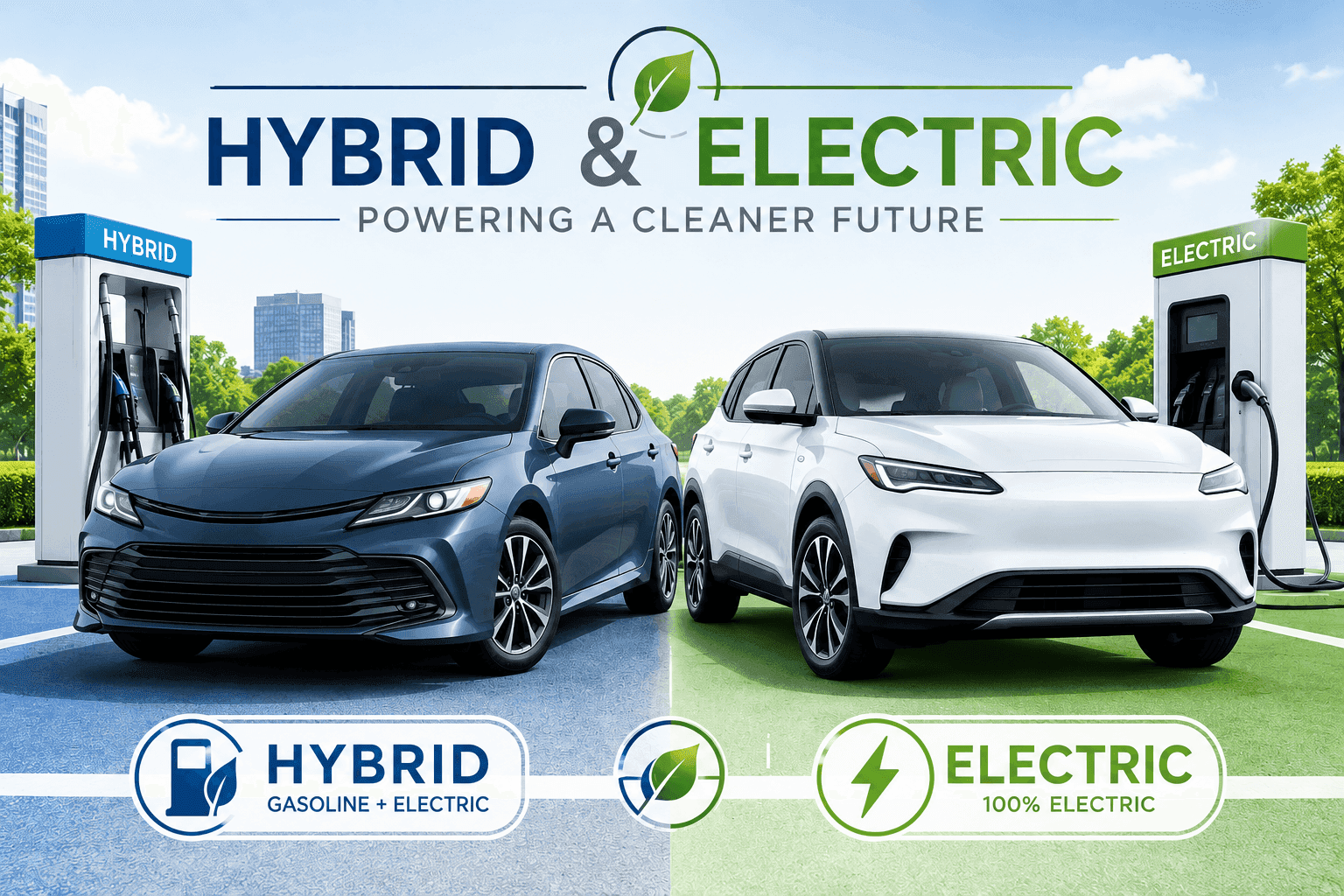
A St. Louis driver comparing monthly fuel bills, winter commuting, and weekend highway miles usually does not need hype. For anyone weighing Should I choose Hybrid or Electric vehicles, the useful answer comes from matching the car to charging access, trip patterns, and total ownership cost.
Kelley Blue Book, Consumer Reports, and local driving realities all point to the same conclusion: the right powertrain depends less on trend and more on where you park, how far you drive, and how often you leave the metro area. This guide explains the practical differences so you can choose with fewer surprises.
The first decision is not hybrid vehicle versus EV prestige, but what ownership problem you want to solve. A driver with a short Clayton commute and home charging faces a different equation than a family doing frequent Missouri weekend trips without reliable charging infrastructure.
Consumer Reports consistently frames vehicle buying around use case, and that matters here because the same model category can feel cheap or expensive depending on your routine. If your priority is the lowest operating cost, a battery electric vehicle often wins when home charging is available, but if your priority is easy refueling on unpredictable schedules, a hybrid electric vehicle usually creates less friction.
Budget should include more than sticker price because financing, insurance premiums, and home charging installation can change the math quickly. A lower-priced hybrid can outperform an EV financially if public charging replaces home charging, while an EV can beat a gas-electric option over time if you charge overnight at residential electricity rates.
HEV: A hybrid electric vehicle uses a gasoline engine and an electric motor, with the battery recharged by regenerative braking and the engine itself. The Toyota Prius remains the clearest mainstream example because it shows how an HEV improves efficiency without requiring plug-in behavior.
PHEV: A plug-in hybrid can charge from an outlet and drive a limited distance on electricity before switching to gasoline. This design works best for drivers who can plug in regularly, because a PHEV that is never charged behaves more like a heavier hybrid.
BEV: A BEV, also called an EV, runs only on battery power and must be charged externally. That makes charging access the defining ownership variable, not just the vehicle’s advertised range.
EVs feel different because the electric drivetrain delivers instant torque, low cabin noise, and often one-pedal driving. Those features are not cosmetic because they reduce stop-and-go fatigue and make urban driving feel smoother than many gas-powered alternatives.
Hybrids feel more familiar because they blend engine and motor power in the background while preserving normal fueling habits. That familiarity matters for buyers who want better fuel economy without changing routines, especially if they are skeptical about public charging reliability.
The ownership impact comes from parts count and usage pattern. EVs usually have lower maintenance costs because they avoid oil changes, exhaust systems, and many engine-related wear items, while hybrids still carry engine service needs alongside battery-related components.
The battery pack stores energy, the controller manages power flow, and the inverter converts current so the electric motor can drive the wheels efficiently. These components shape acceleration, efficiency, and repair complexity, which is why not all EVs or hybrids perform the same in traffic or in extreme temperatures.
Regenerative braking captures energy that would otherwise be lost during deceleration. That system pays off most in city driving and hilly routes, so downtown errands and repeated stoplights usually favor electrified vehicles more than long, uninterrupted freeway runs.
Level 1 charging uses a standard household outlet and is the slowest option. It works best for low daily mileage or overnight top-ups because adding meaningful range can take many hours.
Level 2 charging uses a 240-volt setup and is the practical home and workplace standard for most EV owners. For many St. Louis commuters, Level 2 charging is the difference between effortless ownership and constant battery management.
Level 3 charging, commonly called DC fast charging, is built for road trips and quick top-ups. Its value depends on network reliability, station location, and pricing, which means charger availability is only half the story.
The speed at which your EV can accept power from any charger is determined by its onboard charger. This built-in component converts AC electricity from Level 1 or Level 2 chargers into DC power for the battery. Different vehicles have different onboard charger capacities, so two cars plugged into the same Level 2 station may charge at noticeably different rates. When comparing EVs, check the onboard charger rating in kilowatts, as a higher rating allows for faster home and public charging where available.
St. Louis driving mixes city errands, suburban loops, and interstate travel, so the best vehicle is the one that handles all three without creating range anxiety. An EV fits well when daily miles are predictable and charging is dependable, while a hybrid offers more flexibility when schedules change often.
Drivers in St. Charles face many of the same considerations as those in St. Louis, but with some unique factors. Suburban commutes, access to home charging, and proximity to major highways like I-70 can make both hybrids and EVs practical, depending on your routine. St. Charles also has a growing number of public charging stations, which can help offset the challenges for renters or those without private parking.
Winter range loss is a real Midwest issue because cold batteries are less efficient and cabin heating consumes energy. That matters more for highway drivers than city drivers, since higher speeds already reduce EV efficiency before winter weather adds another penalty.
Summer heat also affects efficiency, but modern battery thermal management systems help protect comfort and battery performance. Buyers should treat thermal management as a durability feature, not a luxury feature, because it influences long-term consistency.
A downtown St. Louis to Clayton commute is EV-friendly if you can charge at home or at work. That route rewards regenerative braking and lower-speed efficiency more than a long rural drive would.
For drivers living in the Central West End, the neighborhood’s mix of historic homes, apartments, and limited off-street parking can influence your vehicle choice. While some newer buildings offer dedicated EV charging, many residents rely on street parking or shared lots, making plug-in access less predictable. If you live in the Central West End and do not have a reserved space with charging, a hybrid may offer more day-to-day convenience, while EV ownership is most practical for those with secured parking and charger access.
Weekend trips to Columbia, Springfield, or Lake of the Ozarks are easier in a hybrid if you want minimal planning. An EV can still work well, but only if you are comfortable checking charger locations and backup options before leaving.
Frequent highway use on I-64, I-44, and I-70 changes the equation because EV efficiency drops at sustained higher speeds. Hybrids tend to deliver more consistent real-world results on long freeway stretches, which is why highway-heavy drivers often report fewer surprises with them.
A single-family home with a garage or driveway is the easiest setup for EV ownership because Level 2 installation is usually straightforward. Private parking turns charging into a routine habit instead of a weekly errand.
Apartments and condos remain the biggest EV barrier because access depends on landlord policy, assigned parking, and electrical upgrades. Renters should verify charging rules before buying, since public charging alone can make daily ownership feel inconvenient and expensive.
Total cost of ownership includes purchase price, energy, maintenance, insurance, and depreciation. Buyers who compare only MSRP often misread the market because the cheapest vehicle to buy is not always the cheapest vehicle to keep.
Hybrids often cost less upfront than comparable EVs, while EVs can cost less to run if home charging is available. That split explains why two rational buyers can reach opposite conclusions without either one being wrong.
Resale value depends heavily on model reputation, battery warranty, and demand in the used market. A smart buyer should check warranty length, battery cooling design, charging speed, and local resale trends before assuming one category holds value better.
Start with weekly miles, then compare vehicle efficiency using MPG for hybrids and miles per kWh for EVs. This simple calculation matters more than broad averages because your own route mix determines whether the savings are modest or substantial.
For electric vehicles, efficiency is commonly measured in miles per kilowatt-hour, written as mi/kWh. This number tells you how many miles your EV can travel on one kilowatt-hour of electricity. A higher mi/kWh rating means your vehicle uses energy more efficiently, which can lower your monthly charging costs. When comparing EVs, look for the mi/kWh figure in addition to range, as it gives a clearer picture of real-world energy use on your typical routes.
Home charging is usually cheaper than public fast charging, and that gap can erase or preserve EV savings. If your EV routine depends on fast chargers several times a week, your operating advantage may narrow enough to make a hybrid more attractive.
EVs have fewer moving parts, no oil changes, and often lower brake wear because regenerative braking reduces friction-brake use. That lowers routine service frequency, which is one of the clearest financial advantages of full electrification.
Hybrids still need engine maintenance, fluid service, and other conventional upkeep. They are often reliable, but their dual systems mean buyers should expect more service complexity than with a pure EV.
Home charging is the central convenience factor in EV ownership. Without it, even a technically affordable EV can feel burdensome because time, station reliability, and charging queues become part of daily life.
Public charging quality varies by network, and broken stalls or slow charging sessions can disrupt plans. That inconsistency matters more than advertised charger counts because a charger that exists but does not work has no practical value.
Road trip planning is manageable, but it requires more attention than gas refueling. Drivers who value spontaneity should be honest about that preference because convenience is a cost, even when it does not appear on a receipt.
This four-step plan turns EV ownership from theory into a routine. Buyers who skip the backup-charger step often discover too late that one charging option is not enough.
A hybrid is usually the better choice if you cannot reliably charge where you park overnight. Convenience favors the vehicle that matches your infrastructure, not the one with the most appealing brochure.
It is also the stronger fit for frequent long-distance travel with unpredictable timing. If your schedule includes sudden highway runs or late-night returns, gasoline refueling still beats planning around charging stops.
EVs produce no tailpipe emissions, while hybrids reduce fuel use but still burn gasoline. That distinction matters most in dense corridors because local air quality improves when vehicles stop emitting directly into traffic-heavy streets.
Lifecycle emissions are more complex because battery manufacturing creates a larger upfront carbon burden than conventional vehicle production. The practical question is not whether manufacturing has impact, but how quickly lower operating emissions offset that impact over years of driving.
In St. Louis, the local grid mix and your annual mileage influence the environmental payoff. Drivers who log steady miles and charge mostly at home generally improve the EV case over time, while low-mileage drivers may see slower lifecycle benefits.
No tailpipe emissions means an EV does not release exhaust while idling in traffic, waiting at lights, or moving through dense neighborhoods. That local benefit is especially relevant near schools, downtown corridors, and other high-exposure areas.
Hybrids still help because they idle less and recover braking energy in stop-and-go traffic. Their environmental advantage is smaller than a full EV’s, but it is still meaningful in urban use.
Start with charging access, then evaluate mileage, road trips, and budget in that order. This sequence matters because an EV without convenient charging can become annoying faster than a hybrid with slightly higher fuel costs.
Choose an EV if you have predictable daily miles, reliable home or workplace charging, and a willingness to plan longer trips. Choose a hybrid or PHEV if you need flexibility across city driving, highway travel, and uncertain charging conditions.
A test drive should be mandatory because acceleration, one-pedal driving, cabin noise, and visibility vary more than many buyers expect. The best paper choice can still be the wrong ownership choice if the driving experience feels off.
A city commuter with a garage is usually best served by an EV, or a PHEV if gas backup feels reassuring. A suburban family with frequent weekend travel often gets the best balance from a hybrid or PHEV.
A renter without dedicated parking should usually choose a hybrid until charging access improves. Infrastructure determines practicality more than enthusiasm does.
Ask for battery warranty terms, expected winter range, and recommended charging habits. Those answers reveal whether the salesperson understands ownership beyond the test drive.
Also ask about charging speed in kW, plug type, and what charging equipment is included or optional. Missing hardware or misunderstood charging specs can create avoidable costs after purchase.
The most expensive EV mistake is buying before creating a realistic charging plan, especially in apartments or condos. A vehicle that looks efficient on paper can become inconvenient and costly if public charging becomes your default.
Another common mistake is paying for more range than you need while ignoring winter reduction. Range matters, but overbuying battery capacity can be less rational than buying a well-priced model that fits your actual weekly driving.
Many buyers also compare only MSRP and ignore insurance, depreciation, and public charging costs. That narrow comparison distorts ownership reality because monthly cash flow is shaped by more than the window sticker.
PHEV buyers often misunderstand usage and then fail to plug in consistently. When that happens, the vehicle may operate like a heavier hybrid, which reduces the efficiency benefit that justified the extra cost.
Buyers also assume all hybrids deliver similar results, but efficiency varies widely by model, tire choice, and driving style. A hybrid badge alone does not guarantee strong savings.
An EV is usually better if you can charge where you park and your daily miles fit the vehicle’s range. A hybrid is often better if charging is unreliable or you take frequent long trips.
Most hybrids are not disappearing across the market. Automakers are reshaping lineups toward newer hybrids, PHEVs, and EVs to meet emissions rules and buyer demand.
Insurance can be slightly higher or roughly similar to a gas model, depending on repair costs and parts pricing. Get quotes for the exact trim because rates vary more by model than by powertrain.
A hybrid still relies on gasoline and includes both engine and electric components. That means less emissions reduction than an EV and potentially more complex repairs than a fully electric vehicle.
The strongest St. Louis decision rule is simple: if you have dependable charging and predictable driving, an EV usually makes the most sense; if you lack charging or drive long distances unpredictably, a hybrid is the safer choice. The best vehicle is not the one with the most technology, but the one that fits your real week without adding hassle.
A hybrid vehicle uses both a gasoline engine and an electric motor to improve fuel efficiency. An electric vehicle (EV) runs entirely on electricity and does not use gasoline.
A plug-in hybrid electric vehicle (PHEV) combines a gasoline engine with a rechargeable battery. It can drive short distances on electric power alone before switching to gasoline.
It depends on your driving habits. Hybrid vehicles are great for drivers who travel long distances or want better fuel economy without charging. Electric vehicles are ideal for drivers who want zero gasoline usage and lower long-term fuel costs.
Yes. Hybrid vehicles can help reduce fuel costs, lower emissions, and provide excellent reliability for commuters and families.
Yes. Many EV owners enjoy lower fuel costs, reduced maintenance, quiet driving, instant acceleration, and environmental benefits.
A hybrid vehicle automatically switches between a gasoline engine and an electric motor to maximize efficiency and performance.
An electric vehicle uses a battery pack and electric motors instead of a traditional gasoline engine.
No. Fully electric vehicles do not require oil changes because they do not have gasoline engines.
Yes. Hybrid vehicles still have gasoline engines and require regular oil changes and maintenance.
Generally, yes. EVs have fewer moving parts, no oil changes, and less brake wear because of regenerative braking systems.
Regenerative braking captures energy during braking and sends it back to recharge the battery, improving efficiency and range.
Most electric vehicle batteries are designed to last 8–15 years or more depending on driving habits, climate, and maintenance.
Yes. Most manufacturers offer EV battery warranties for at least 8 years or 100,000 miles.
Battery replacement costs vary by vehicle, but prices continue to decrease as EV technology improves.
Many modern EVs offer between 220 and 400+ miles of driving range depending on the model.
Range anxiety is the fear that an electric vehicle may run out of battery power before reaching a charging station.
Charging time depends on the charger type:
Yes. Most EV owners charge their vehicles at home using either a standard outlet or a Level 2 home charger.
You can use a standard outlet, but many owners install a Level 2 charger for faster charging times.
Level 1 charging uses a standard household outlet and provides slower charging speeds.
Level 2 charging uses a 240-volt outlet and charges EVs much faster than standard household outlets.
DC Fast Charging is the fastest charging method and can add significant driving range in under an hour.
Charging networks continue to grow rapidly throughout the United States, especially along highways and in cities.
Drivers can use apps like PlugShare, ChargePoint, Electrify America, or Google Maps to locate nearby charging stations.
Yes. Many modern EVs offer long driving ranges and access to fast-charging networks that support long-distance travel.
Yes. Cold weather can temporarily reduce battery efficiency and driving range.
Yes. EVs must meet strict safety standards and often perform very well in crash testing.
Yes. Electric vehicles are designed to safely operate in rain and wet conditions.
Yes. EVs can safely go through automatic car washes just like gasoline vehicles.
Yes. Many EVs offer excellent traction because of their low center of gravity and available all-wheel drive systems.
Hybrid vehicles offer:
Electric vehicles offer:
Yes. Hybrid vehicles reduce fuel consumption and emissions compared to traditional gasoline vehicles.
EVs produce zero tailpipe emissions and can help reduce overall environmental impact.
Some hybrids and plug-in hybrids can operate on electric power alone for short distances.
A standard hybrid recharges itself while driving. A plug-in hybrid can be charged externally and usually offers longer electric-only driving capability.
Insurance costs vary, but some EVs may cost slightly more to insure because of advanced technology and repair costs.
Yes. Many electric trucks and SUVs offer impressive towing capabilities.
Yes. Many automakers offer hybrid SUVs for families and commuters.
Yes. Many hybrid and EV models offer spacious interiors, advanced safety systems, and lower operating costs.
Some new EVs qualify for federal and state tax incentives depending on eligibility requirements and battery sourcing rules.
Some plug-in hybrid vehicles may qualify for incentives depending on battery size and government regulations.
Yes. EV owners may save money on:
Yes. Hybrids are excellent commuter vehicles because of their strong fuel economy and low operating costs.
Important factors include:
Consider:
Most automakers continue investing heavily in EV technology, charging infrastructure, and battery development as demand for electric transportation grows worldwide.